
A Crisis Meeting
Unit 14 · Trends · Happy Valley Poulterers
Vocabulary · Warm-Up
Practise Saying These Words
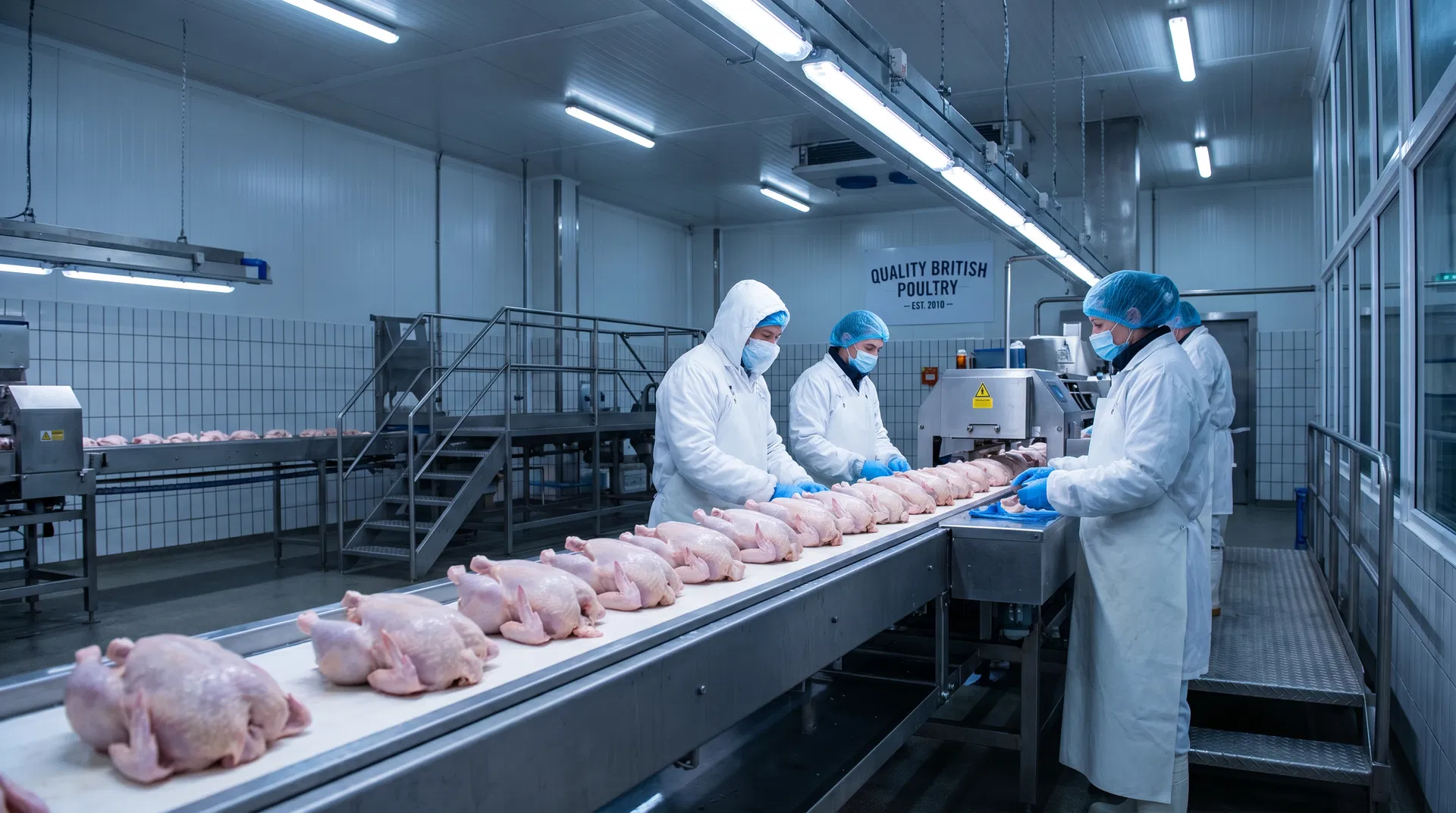
Practise saying the words below to each other and mark where the stress falls. These are key business vocabulary items you will hear in the recording.
turnover
to undercut
profit margin
a (retail) outlet
a supplier
a competitor
competition
to withdraw
to offset
to outsell
an outlay
Listening · Task 1
Listen and Complete the Graph
Happy Valley Poulterers is a company which produces poultry products for the British domestic market. Its range includes chickens — both frozen (battery-farmed) and fresh (corn-fed) — sold primarily through supermarkets.
You are going to hear three managers describing the events which led to a crisis in chicken sales. Listen and fill in the five missing figures on the graph below (marked with a ?).
A Crisis Meeting — Happy Valley Poulterers
Unit 14 · Trends · Business English
Sales of Happy Valley Poulterers chickens (£10,000s) — Aug to Jul
- Frozen chicken
- Fresh corn-fed
Grey bars = missing values to fill in belowGreen bars = your entered values
Fill in the 5 missing values (in £10,000s):
🟫 Frozen chicken sales
🟦 Fresh corn-fed sales
5 of 5 values remaining
Listening · Task 2
Listen Again and Answer These Questions
Listen to the recording a second time and write your answers in full sentences. Model answers are provided below each question once you have written your response.
What event led to this emergency meeting being called?
What caused the initial decline in sales of frozen chicken?
Why wasn't December as bad a month as it might have been?
What did Happy Valley's competitors do in January?
Why were they surprised by the good performance in February?
To what does he attribute the incidence of salmonella poisoning at the old people's home?
What is ironic about the performance of frozen chicken in the last three months?
Reading · Transcript
A Board Meeting — Full Transcript
Vocabulary · Glossary
Selected Listening Vocabulary
Study the key vocabulary from the recording. Click each term to reveal its definition and an example sentence.
Vocabulary · ABCD Test
Choose the Correct Word
Choose the best option (A, B, C or D) to complete each sentence. All answers are drawn from the vocabulary in this lesson.
The Dutch company used chicken as a ___ in order to attract customers to their wider range of meat products.
The poor December sales figures were ___ by strong turkey sales over the Christmas period.
Amanda called the meeting to ___ everyone on the latest developments with St Cotes Supermarkets.
Sales of fresh corn-fed chickens ___ to just £40,000 in May following the Newsnight broadcast.
The situation was ___ when Van Lyken took the Safefare contract in January.
The call from St Cotes was not totally ___ — the company had been aware of the declining sales figures.
Considering the minimal ___ on advertising, the February sales figures were remarkably strong.
By April, fresh corn-fed chickens were matching frozen sales and were set to ___ them.
Speaking · Vocabulary Revision
Use These Words in Conversation
Click a word card to see its meaning, an example sentence, and hear its British pronunciation. Tick it off once you've used it in conversation.
0/20 usedSpeaking · Pair Work
Discussion Questions
Work in pairs. Discuss the questions below. Try to use the suggested vocabulary in your answers. Your teacher may ask you to report back to the class.
Think of a company that has faced a public relations crisis (e.g. a food scare, a product recall, or a scandal). What caused the crisis? How did the company respond? Did sales plummet or recover?
Some companies use aggressive pricing strategies — selling products below cost to undercut competitors. Is this a fair business practice? What are the long-term risks for both the company and the market?
How important is media coverage in shaping consumer behaviour? Can you think of a case where a news report caused sales to plummet — even if the product was not actually dangerous?
Imagine you are a manager at Happy Valley Poulterers. What three actions would you recommend to the board to recover from this crisis? Use as much of the lesson vocabulary as possible.
Is it ethical for a company to continue selling a product when its safety has not yet been proved or disproved? What responsibilities do companies, supermarkets, and the media each have in such a situation?
How has the rise of social media changed the way companies handle crises? Do companies now need to act faster? What are the risks of acting too quickly versus too slowly?
Tokizz · Vocabulary Expansion Through Conversation
A Crisis Meeting · B2/C1 · Business English