
Dopamine Fasting
A staple of modern world?
Speaking · Warm-Up
Are you addicted? Discuss with your partner.
Match the words below to the images. Which of these would be hardest to give up? Discuss with your partner.
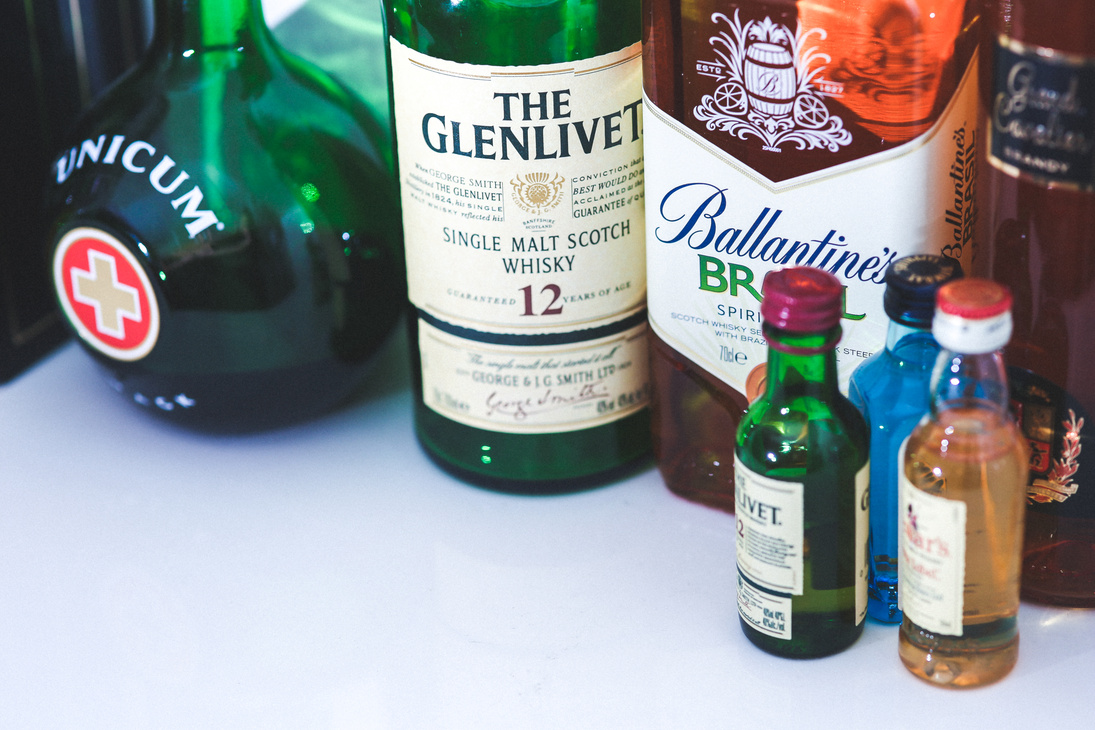
teetotaller
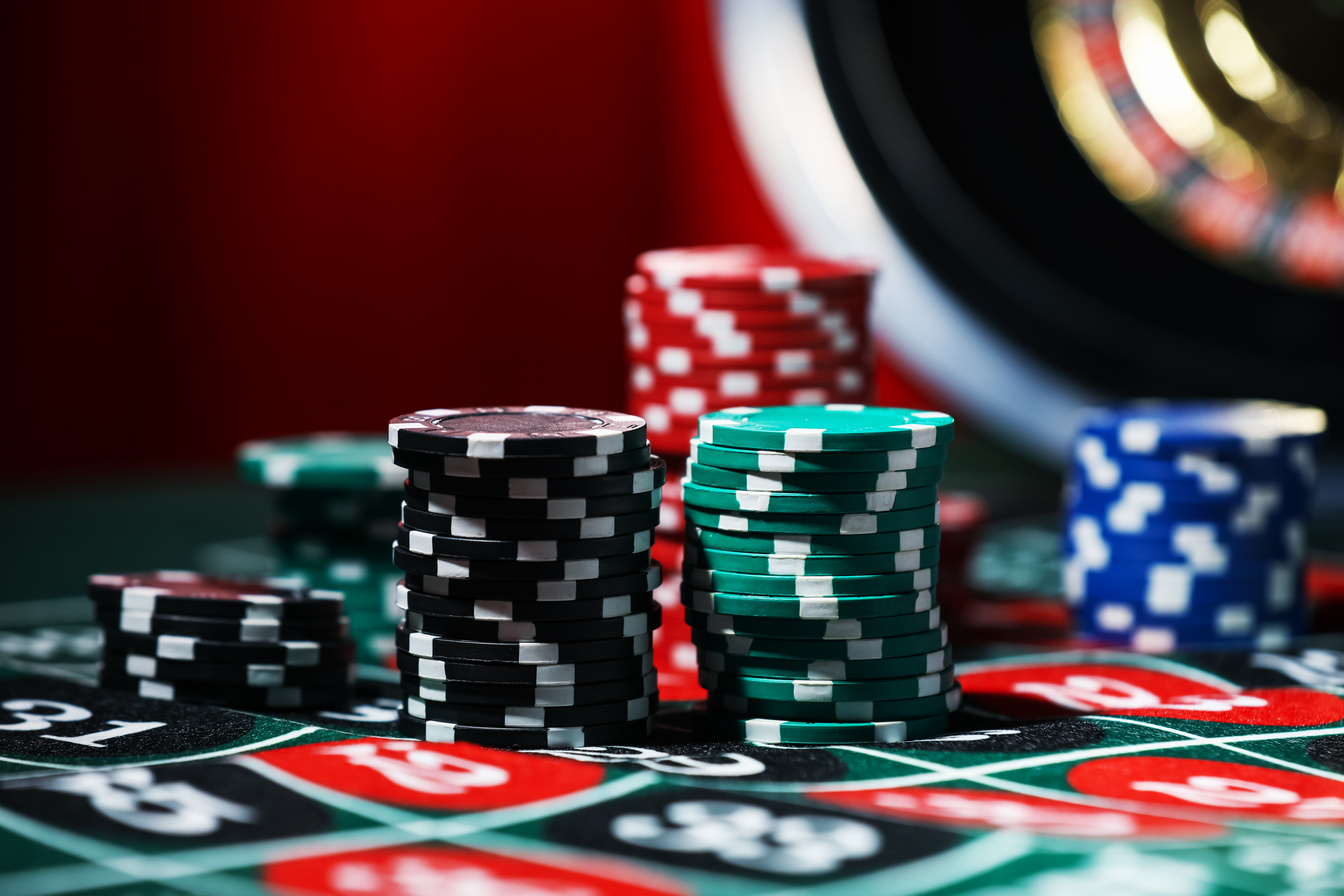
gambling

shopaholism

workaholism

saturated fats
scrolling

fatty foods
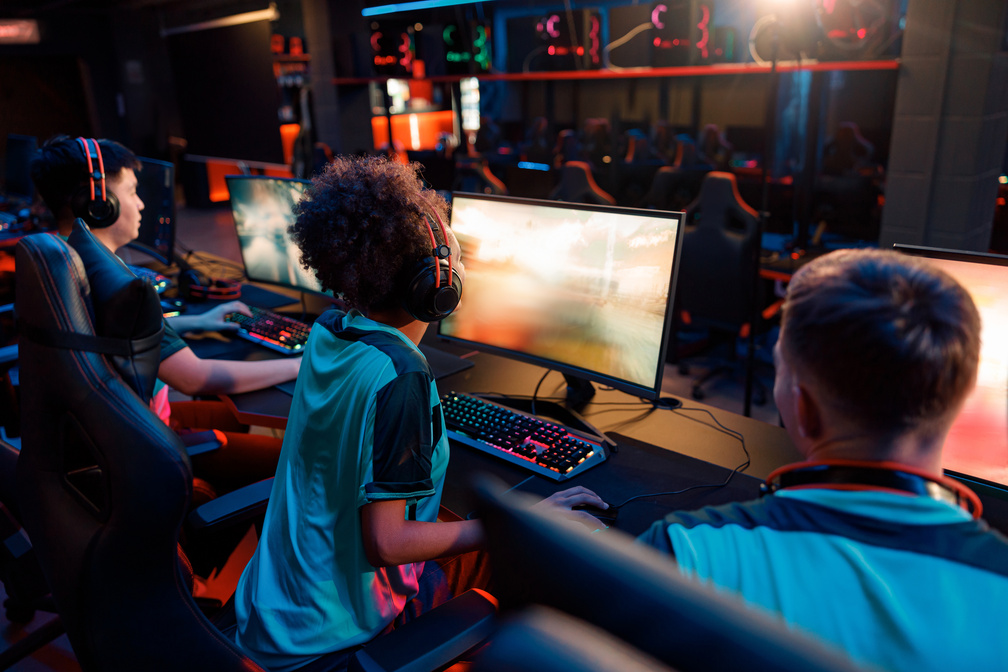
gaming

smoking
Discuss these questions with your partner:
Which of the items above would be easiest to cut out of your life? Why these ones?
Which aspects are most problematic for you personally?
Are we responsible for our dopamine cravings, or is technology exploiting them?
Do we really have free will online, or are algorithms controlling us?
What would life be like if we got dopamine from real experiences, not screens?
Does constant pleasure make us less able to feel real happiness?
Who should manage dopamine addiction — individuals or society?
Vocabulary · Bank
Addictions — Useful Expressions
Study these expressions for talking about addictions and dependencies. Use them in the speaking activities.
BBC Reel · Video
What is Dopamine Fasting and is it good for you?
In this BBC Reel, experts explore the concept of dopamine fasting — a practice of deliberately abstaining from high-stimulation activities to reset the brain's reward system. Is it a genuine wellness tool, or just another tech trend?
Watch the full video before completing the listening exercises below.
Quizlet flashcards for this lessonListening · Exercise
True or False?
Listen to the video and decide whether each statement is True or False.
Dopamine fasting involves avoiding electronics, food, and social interaction to reset the brain's reward system.
This practice has gained popularity among New York City executives.
Dopamine fasting is not about eliminating dopamine but about abstaining from activities that overstimulate the reward pathway.
Overconsumption of modern pleasures—social media, processed foods, and high-speed internet—leads to desensitization and increased happiness.
Neuroscience shows that pleasure and pain are processed in the same brain regions, however excessive pleasure-seeking leads to a painful comedown.
Many industries engineer their products to maximize dopamine release, making them highly addictive.
A 24-hour dopamine fast, done quarterly, helps individuals reflect, reset their minds, and gain insights about their lives.
Evolutionarily, our brains are wired for overabundance, not for scarcity.
In treating addiction, abstaining from a specific addictive behaviour for 10 days helps restore brain balance.
The best way to get dopamine sustainably is through effort-based activities like exercise, meditation, and heat exposure.
Multiple Choice · Exercise
Choose the Correct Word
Choose the best word (A–D) to complete each sentence. Pay attention to collocations and prepositions.
We live in an era of unprecedented ______, where an excess of material goods and digital entertainment often leads to decreased happiness.
This phenomenon suggests we've reached a ______ point, where our brains are overwhelmed by readily available pleasures.
The core idea behind dopamine fasting is to ______ from activities that trigger excessive dopamine release.
Many individuals find themselves ______ on digital devices and social media, making this practice increasingly relevant.
Our primitive brain wiring, designed for survival in a world of ______, struggles to adapt to the modern environment of constant gratification.
Psychiatrists often work with individuals suffering from ______ to various substances and behaviors.
Vocabulary · Glossary
Key Terms from the Video
These 30 terms appear in the video and reading text. Click any term to reveal its definition and an example sentence. Study them before attempting the vocabulary exercises.
Reading · Text
Dopamine Fasting — Full Transcript
Read the full transcript of the BBC Reel video. Pay attention to the key vocabulary and expressions highlighted in the glossary above. These paragraphs are the source for the gap-fill exercises below.
Dopamine fasting, for me, is not using any kind of electronics, not consuming any kind of food, not communicating with people. Basically, isolating myself from all of the things in the modern world that can release dopamine. In the last five years or so, there's been a trend in the Silicon Valley tech executives to do a dopamine fast. When you're doing a dopamine fast, you're not fasting from dopamine. What you're doing is you're fasting from the substances or the behaviours that cause a release of dopamine in the reward pathway. I started this practice back in 2015. It was initially a confused response from my friends, and I think that just goes to show how normalized social media, electronics, high-dopamine activities usage has become. I was not necessarily surprised that people were like, "What is this? This is strange." The world of overabundance is a new and unprecedented human stressor. It's very paradoxical because we think, "Oh, we've got all these material goods that we ever wanted. Our lives should be great." And, in fact, what's happened is that we've reached this tipping point where the more stuff we have, the less happy we actually are.
Dopamine is a chemical that we make in our brains. It is essential to the experience of pleasure, reward, and motivation. The more dopamine that we release in the specific part of our brain called the reward pathway, the more reinforcing or pleasurable that substance or experience is. One of the most exciting findings in neuroscience in the past 75 years is that the same parts of the brain that process pleasure also process pain, and they work like opposite sides of a balance. So, for example, when I eat a piece of chocolate—I like chocolate—I get a little release of dopamine, and my balance tilts to the side of pleasure, but no sooner has that happened than my brain adapts to that increased dopamine by downregulating dopamine transmission. And I like to imagine that as these little neuroadaptation gremlins hopping on the pain side of the balance to bring it level again. But the gremlins like it on the balance, so they don't hop off as soon as it's level. They stay on until the balance is tilted an equal and opposite amount to the side of pain. That's the comedown, the hangover, the aftereffect.
We know that social media engineers are quite literally putting as much dopaminergic stimulation into their products as possible. We've never had so many processed foods before, ever available to humans. Pornography is extremely stimulating, and, you know, especially with the use of high-speed Internet, it's accessible in a way it wasn't even two decades ago. Modern drugs—cannabis has become roughly ten times more potent than it was 50 or 100 years ago. And the practice of dopamine fasting is to sort of undo some of those hooks. When I dopamine fast, it happens just for one day, so just 24 hours. When I wake up in the morning, all I'm allowed to do is meditate, journal, drink some water, walk, and think. And that's it. No socialization. No computer, no social media. And I only do it once a quarter. This practice of going outside influence or stimulus is not necessarily new. Buddhists can attest to the value of that. But I think it's actually more important in the modern world because we have the most engineered, stimulating factors that have ever existed in human history.
This primitive wiring for seeking out pleasure and avoiding pain is adapted for a world of scarcity and ever-present danger. It makes sense from an evolutionary perspective, right? That's a very clever strategy in an environment where, if you're not constantly looking for the next watering hole or the next source of food, you are going to die. But it's an absolutely horrible neurological mechanism in a world where a swipe right or swipe left can get you cocaine, cannabis, sex, video games—you name it. So now we're walking around with our balances chronically tilted to the side of pleasure, such that we need more and more potent forms of pleasure to feel anything good at all. So what are we going to do about it? It's very unlikely that our brains, our reward circuits, are going to change. That reward circuit has been conserved over millions of years of evolution and across species. The reward pathway in the human brain is pretty much identical to the reward pathway in the lizard brain and every other organism that you're going to look at.
So instead, what we have to do is really change our ecosystem. Through meditation, through journaling, while I'm dopamine fasting, there are some things that I discover about myself, like, "Oh, I'm actually not really enjoying this job. Maybe I want to switch jobs." Or, "Hey, I have an idea for something that I've been putting off, and I think I should finally pursue this." You can think about this as a productivity tool, and it's a fine way to do that. Personally, I find that it's more of like a self-exploration tool. I have found that, as I've matured in this practice, my body will start to crave it. I'm actually dopamine fasting in three days. I've already dopamine fasted this quarter, but again, as I noticed in my intuition, my body was like, "Yeah, I could use another one."
It's not as crazy as it sounds, and it's not as difficult as it might sound. There is value—biochemically, physiologically, evolutionarily—in being bored and being alone with your thoughts. A dopamine fast definitely resets reward pathways. The problem is, what do you do after that, right? As people then go back to their regular lives. I'm a psychiatrist. I work with people with severe addictions to all kinds of substances and behaviours. Yes, people can get addicted to behaviour. I've seen people as addicted to gambling, pornography, video games, and social media as they get addicted to cocaine, cannabis, alcohol, and nicotine. So it's the same disease process. And what I've been doing for about 20 years in my clinic is a different kind of dopamine fast, where I ask people not to abstain from every pleasurable experience in their lives, but rather to identify that substance or behaviour that they have a problematic relationship with. Abstain from your drug of choice for 30 days. Why 30 days? Well, 30 days is the average amount it takes for those neuroadaptation gremlins on the pain side of the balance to hop off and a level balance to be restored. Here's the thing about the gremlins: they are agnostic to which side of the balance is tilted first. If we initially tilt the balance to the side of pain, like with exercise, for example, or an ice-cold water bath, those gremlins will react by hopping on the pleasure side of the balance, which means that we get our dopamine indirectly, and that's something that I prescribe to my patients and recommend in my book Dopamine Nation. That the better way to get your dopamine is indirectly, by paying for it up front.
Vocabulary · Gap-Fill
Complete the Sentences
Use the clues to find the missing word(s) and complete each sentence. The letters provided are a guide.
In the world, constant digital keeps our brains overstimulated.
Clue: m _ _ _ r _ / s _ _ _ _ _ _ _ _ _ _ n
Many people try fasting to regain focus and control.
Clue: d _ _ _ m _ _ _ fasting
Doctors may '' a digital detox for those struggling with tech addiction.
Clue: p _ _ _ _ _ _ _
Some users start themselves when virtual life replaces real social contact.
Clue: i _ _ _ _ _ _ _ _ _ themselves
Apps are carefully to keep attention through variable reward systems.
Clue: e _ _ _ _ _ _ _ _ _
Our brains' pathway becomes overstimulated by endless novelty.
Clue: r _ _ _ _ _ pathway
Tech in Silicon Valley often experiment with productivity tools and wellness routines.
Clue: e _ _ _ _ _ _ _ _ _ s
Excessive dopamine hits can cause receptor , lowering sensitivity to pleasure.
Clue: d _ _ _ _ _ _ _ _ _ _ _ _ n
We may be approaching a point, where overstimulation affects focus and wellbeing.
Clue: t _ _ _ _ _ _ point
Our brains evolved to handle , but modern abundance overwhelms this system.
Clue: s _ _ _ _ _ _
Entertainment platforms form a vast attention , competing for every click.
Clue: e _ _ _ _ _ _ _ _
People are encouraged to from screens occasionally to restore focus.
Clue: a _ _ _ _ _ _
An of online options makes calm and silence feel uncomfortable.
Clue: o _ _ _ _ _ _ _ _ _ _ _
When dopamine levels drop, we start to stimulation again, just like with any drug.
Clue: c _ _ _ _
Recovering users say they've finally balance and control over their impulses.
Clue: r _ _ _ _ _ _ _ balance
Translation · Exercise
Translate into English
Translate the following sentences from Polish into English. Use the vocabulary from this lesson.
Ludzie coraz czesciej probuja 'postu dopaminowego', aby ograniczyc nadmierna stymulacje.
W nowoczesnym świecie stała ekspozycja na bodźce cyfrowe przewyższa naturalną tolerancję mózgu.
Lekarze mogą zalecać odstawienie technologii, aby przywrócić równowagę psychiczną.
Uzależnienie od internetu prowadzi do izolacji i spadku potrzeby kontaktu społecznego.
Aplikacje są projektowane tak, by wywoływać maksymalną reakcję dopaminową.
Zbyt duża ilość bodźców cyfrowych może prowadzić do krytycznego punktu, w którym trudno zachować produktywność.
Speaking · Vocabulary Revision
Use These Words in Conversation
Click a word card to see its meaning, an example sentence, and hear its British pronunciation. Tick it off once you've used it in conversation.
0/18 usedTokizz · Vocabulary Expansion Through Conversation
Dopamine Fasting · B2/C1