
Tokizz · C1 Level
Body Language
Amy Cuddy — Your Body Language May Shape Who You Are
Speaking · Warm-Up
What do these expressions mean to you?

Look at the non-verbal expressions below. What do they mean? How might someone feel when doing each one?
open up
to become more relaxed and expressive
close down
to become tense and withdrawn
fold your arms
to cross your arms over your chest
hunch
to round your back and shoulders forward
sit straight
to sit with an upright, aligned posture
spread out
to take up more physical space
raise your hand
to lift your hand upward
put your hands on your hips
to place hands on hips — a power pose
TED Talk · Amy Cuddy
Your Body Language May Shape Who You Are

In this iconic TED Talk, social psychologist Amy Cuddy argues that "power posing" — standing in a posture of confidence, even when we don't feel confident — can affect testosterone and cortisol levels in the brain, and might even have an impact on our chances for success.
Watch the full TED Talk before completing the listening exercises below.
Listening · Exercise 1
True or False?
Mark each sentence T (True) or F (False) based on the TED Talk. Explain why the false ones are wrong.
Longer Listening — requires watching the full video
The speaker offers a complicated life hack that involves changing one's posture for two minutes.
The audience is asked to observe their current posture and body language.
Body language has a significant impact on communication and judgments.
Studies show that body language influences important life outcomes like hiring decisions and legal judgments.
The speaker emphasises that body language only affects how other people perceive us.
Nonverbal expressions of power and dominance involve expanding and taking up space, while feelings of powerlessness lead to closed, protective postures.
The speaker conducted an experiment showing that adopting low-power poses for two minutes led to increased risk-taking behaviour and hormonal changes.
These findings suggest that our nonverbal cues cannot influence our thoughts, feelings, and behaviors.
The speaker shares a personal story about overcoming feelings of impostor syndrome and encourages the audience to 'fake it till you make it.'
The speaker urges the audience to practice power posing in private before stressful situations.
Vocabulary · Glossary
Key Vocabulary & Expressions
Study the key vocabulary from the TED Talk. Click each term to reveal its definition and example sentence.
Word Formation · Exercise
Adjust the Words to Fit the Context

Use the word roots below to form the correct word for each numbered gap. Type your answer in the box next to each gap number.
Unleashing Potential: The Science of Power Posing
Communication transcends spoken words, with nonverbal cues playing a [1] role in our interactions. In a compelling presentation, a social psychologist unveiled the power of body language through a simple yet [2] technique: power posing. This two-minute adjustment in posture has the potential to reshape our thoughts, feelings, and behaviors, offering a [3] tool for personal growth.
According to the TED talk she gave, Amy Cuddy convinced her audience that if they are [4] of their body language, adopt more powerful poses rather than powerless ones, these subtle shifts can make a [5] difference. Many of us inadvertently adopt defensive postures, limiting our own potential. Through research findings, social [6] have found out how body language influences social judgments, from job opportunities to personal [7]. This simple yet profound technique, power posing, empowers individuals to cultivate confidence and [8], ultimately impacting the trajectory of their lives.
Word Roots
Vocabulary · Exercise
Choose the Correct Word
Choose the best word (A–D) to complete each sentence. The words are drawn from the lesson vocabulary and word formation exercise.
Body language spoken words, communicating emotions and intentions without a single syllable.
The researcher gave a presentation that left the audience completely convinced by her argument.
Adopting an open posture plays a role in projecting confidence during job interviews.
These shifts in posture — barely noticeable to others — can have a profound effect on your hormones.
Power posing individuals to take control of their own confidence before high-stakes situations.
She decided to confidence even when she felt like an impostor, and gradually it became genuine.
Being of your own non-verbal cues is the first step towards changing how others perceive you.
The study a direct link between expansive postures and increased levels of testosterone.
Her in the boardroom was clear: she leaned forward, made eye contact, and spoke with authority.
A small in posture — sitting upright instead of slouching — can change how you feel within minutes.
Speaking · Vocabulary Revision
Speaking Vocabulary Revision
Live Conversation Mode
Say a word or phrase, then tap it to mark it as used.
Vocabulary · Exercise
Facial Expressions

Match the non-verbal expressions with the correct images. Then answer: In what situation may you assume these facial expressions? Give a few examples.
Vocabulary · Exercise
Body Postures
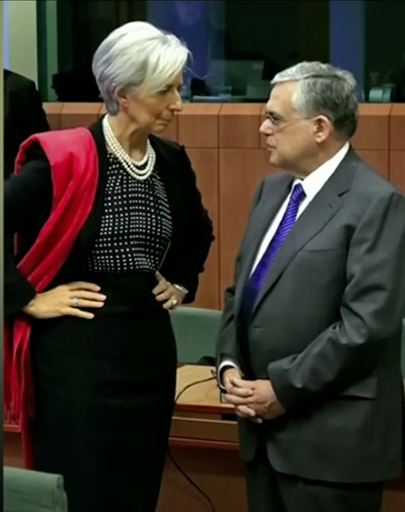
Match the non-verbal expressions with the correct images. Then answer: In what situation may you assume these poses? Give a few examples.